
A trip to Dubai is incomplete without escaping the gleaming skyscrapers of the city center to experience the timeless expanse of the Arabian Desert. A Dubai desert safari combines adrenaline-pumping off-road adventures, deep cultural heritage, panoramic sunset vistas, and world-class hospitality under the starlit sky.
Whether you are seeking extreme dune bashing in a 4×4, an authentic Bedouin cultural experience, or a luxurious private dinner surrounded by rolling red dunes, this comprehensive guide covers every detail you need to plan your ideal expedition.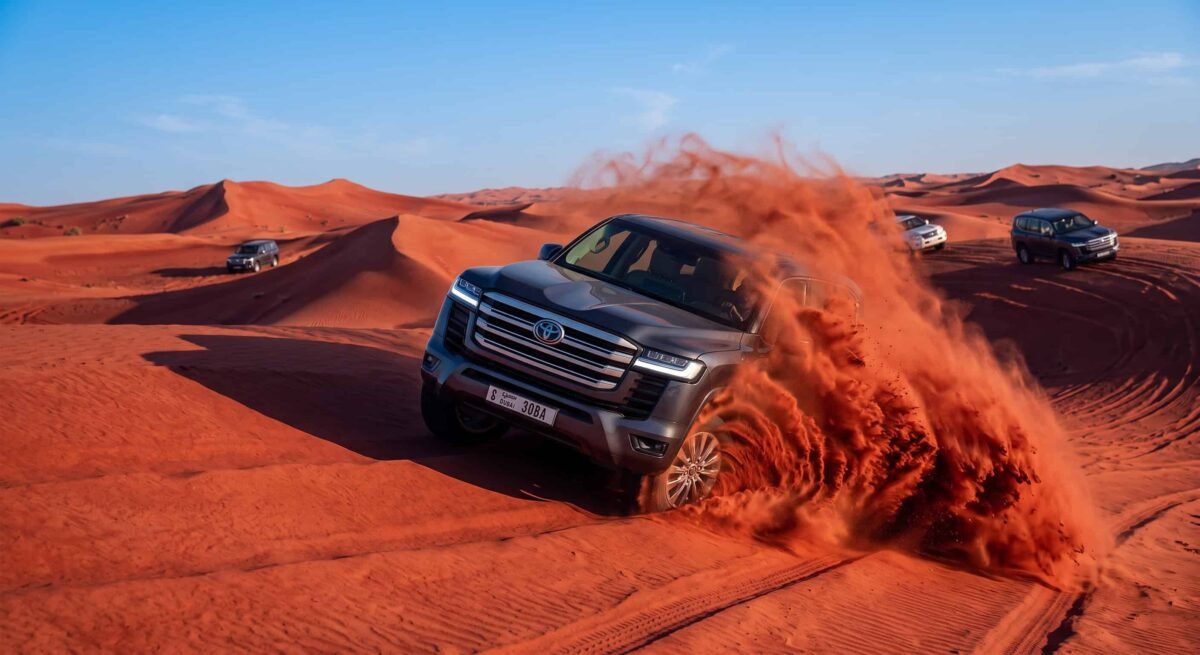
Why a Dubai Desert Safari is a Must-Do Experience
The Arabian Desert holds historical and cultural significance for the United Arab Emirates. For centuries, nomadic Bedouin tribes navigated these windswept landscapes, mastering survival, falconry, and camel breeding. Today, the desert offers travelers a contrast to modern metropolitan life:
- Stunning Natural Landscapes: The Lahbab desert and the Dubai Desert Conservation Reserve (DDCR) showcase massive red sand dunes, pristine ripple patterns, and native flora and fauna.
- Adrenaline & Adventure: The dynamic terrain allows for dune bashing, sandboarding, quad biking, and dune buggy driving.
- Authentic Heritage: Cultural desert camps provide firsthand access to traditional music, Tanoura dancing, henna artistry, falconry demonstrations, and classic Arabian coffee rituals.
- Astrophotography & Stargazing: Far from city light pollution, the open desert offers clear night skies ideal for stargazing and low-light photography.
Types of Desert Safaris in Dubai
Desert safari packages are structured around different times of day, catering to diverse
1. Morning Desert Safari
The morning safari is ideal for early risers, fitness enthusiasts, and travelers with limited evening availability.
- Highlights: Sunrise photography, sandboarding down cool morning dunes, and high-energy dune bashing before the peak heat.
- Atmosphere: Quieter and focused purely on action sports and scenic terrain.
- Duration: Approximately 3 to 4 hours.
2. Evening Desert Safari (The Classic Experience)
The standard and most sought-after package, combining day-to-night transitions over the dunes.
- Highlights: Afternoon dune bashing, sunset photo stops, camel riding, BBQ buffet dinner, and live cultural entertainment shows.
- Atmosphere: Festive, family-friendly, and culturally immersive.
- Duration: Approximately 6 to 7 hours.
3. Overnight Desert Safari
Designed for travelers who want to disconnect from urban life and sleep beneath the desert sky.
- Highlights: Everything included in an evening safari, followed by late-night bonfires, overnight tent stays, stargazing sessions, and a hot breakfast at sunrise.
- Atmosphere: Relaxed, tranquil, and atmospheric.
- Duration: Approximately 16 to 18 hours.
4. Luxury and Private Conservation Safaris
Focuses on exclusivity, wildlife observation, and fine dining.
- Highlights: Travel in open-top vintage Land Rovers or luxury 4x4s, access to protected reserves like the Dubai Desert Conservation Reserve (DDCR), private Bedouin tents, and curated multi-course gourmet meals.
- Atmosphere: Intimate, tranquil, and upscale.
Key Activities and Adventures
A comprehensive desert safari features a variety of motorized sports, traditional activities, and entertainment. Booking through an experienced operator likeKazdoora Tours ensures your itinerary is balanced with safety-certified drivers, well-maintained off-road equipment, and authentic camp facilities.
Dune Bashing
Dune bashing is the core adventure activity of most safaris. Professional drivers deflate the tires of four-wheel-drive vehicles (commonly Toyota Land Cruisers or Nissan Patrols) to maximize traction on loose sand, navigating steep dune ridges and drops.
- Safety Standards: Vehicles must be equipped with roll cages, reinforced suspension systems, first-aid kits, and specialized safety harnesses.
- Motion Sensitivity: The motion mirrors a roller coaster; travelers prone to motion sickness should avoid heavy meals beforehand and sit in the front passenger seat.
Quad Biking and Dune Buggies
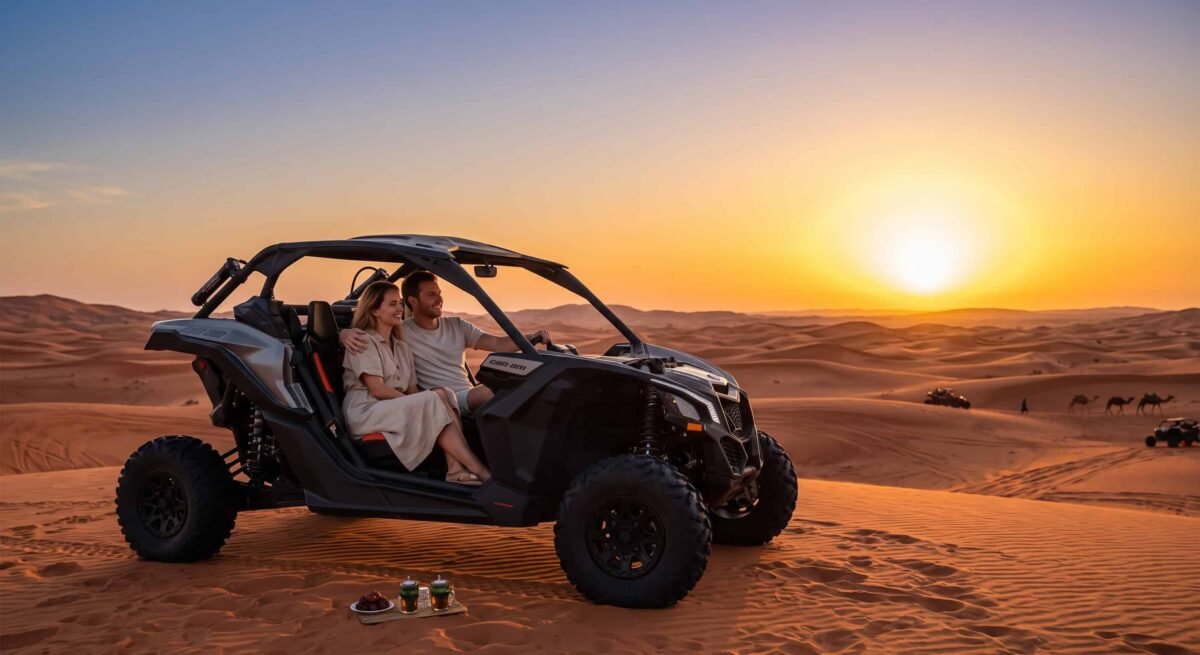
For travelers who prefer direct control of their vehicle, quad bikes (ATVs) and custom dune buggies provide hands-on power across open sand fields.
- Single-Seat Quad Bikes: Agile, responsive, and ideal for defined circuit tracks or guided open-desert runs.
- High-Horsepower Buggies: Equipped with bucket seats, full roll cages, and high-travel suspension systems suitable for tackling large red dunes.
- Prerequisites: Riders receive full safety briefings, helmets, and goggles. No special driving license is required for closed desert circuits.
Sandboarding
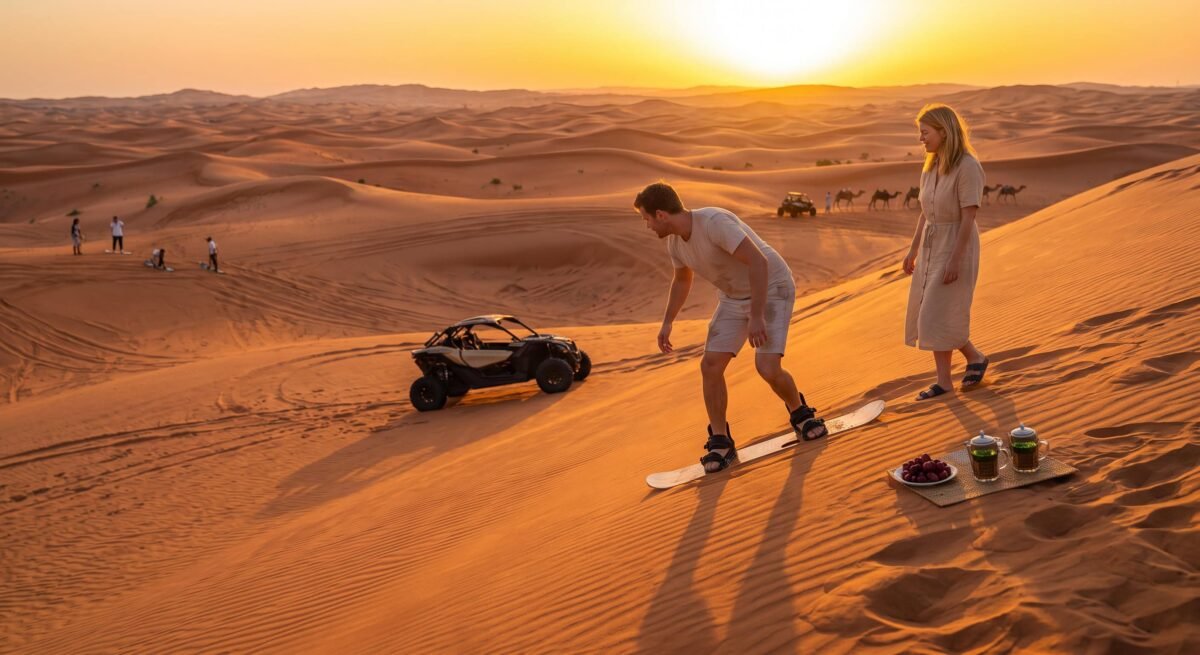
Sandboarding involves strapping into a specialized board to glide down natural desert slopes, functioning similarly to snowboarding on fine sand.
- Technique: Keep knees bent, lean back slightly to prevent the nose from catching sand, and pick smooth, non-tracked slipfaces.
- Suitability: Suitable for all age groups and skill levels, with gentler dunes available for beginners.
Camel Trekking
Known historically as the “Ships of the Desert,” camels provide a traditional viewpoint of the surrounding dunes.
- Experience: Short 10-to-15 minute rides within camp perimeters, or extended 45-minute caravan treks across natural trails.
- Insight: Provides an authentic look at historical Bedouin transport methods across the Arabian Peninsula.
The Bedouin Camp: Cultural Immersion & Dining
As dusk falls, safari groups transition from the dunes into traditional desert camps modeled after historic Bedouin settlements.
The Culinary Experience
Camp dining centers around open-fire grills and traditional Middle Eastern staples:
- Starters: Fresh pita bread, hummus, mutabal (eggplant dip), tabbouleh, fattoush, and falafel.
- Live Barbecue: Skewered shish taouk (chicken), kofta kebabs, and grilled lamb chops prepared over charcoal.
- Main Courses: Aromatic Biryani rice, Arabic chicken machboos, lentil soups, vegetarian stews, and sautéed vegetables.
- Desserts: Fresh seasonal fruits, Umm Ali (warm bread pudding), and syrup-soaked Luqaimat (sweet dumplings) with sesame seeds.
What to Wear and Pack
Selecting appropriate clothing and accessories ensures comfort across changing desert temperatures and sandy environments.
Clothing Recommendations
- Daytime: Loose, breathable fabrics such as cotton, linen, or technical moisture-wicking materials. Modest cuts that cover shoulders and knees are practical and culturally considerate.
- Evening/Winter Months: Desert temperatures drop significantly after sunset. Bring a light jacket, windbreaker, or wrap between November and March.
- Footwear: Flat sandals, slip-on shoes, or sports shoes. Avoid complex lace-up boots that trap sand, as well as thin high heels that sink into dunes.
Essential Packing Checklist
- UV Protection: High-SPF sunscreen, polarized sunglasses, and a wide-brimmed hat or scarf.
- Dust Protection: A traditionalshemagh (keffiyeh) or lightweight neck gaiter to shield against blowing sand during ATV runs.
- Camera Gear: A camera or smartphone equipped with a secure wrist strap and a sealable bag or cover to keep abrasive sand out of lenses and charging ports.
- Hydration & Cash: Bottled water is standard, but carrying cash (AED) is helpful for tipping drivers and purchasing optional camp souvenirs.
Safety, Health, and Accessibility
Professional tour operators enforce stringent protocols to ensure passenger safety across rugged terrain.
Driver Qualifications & Vehicle Integrity
- All safari drivers hold specialized desert driving licenses issued by the Dubai Roads and Transport Authority (RTA).
- Tour vehicles undergo regular mechanical inspections, tire pressure calibrations, and safety gear checks.
Health Considerations and Restrictions
Dune bashing is a high-impact physical activity. Standard operator guidelines recommend caution for the following groups:
- Pregnant Women: Standard dune bashing is not recommended; opt instead for a direct, smooth camp transfer via paved access roads.
- Infants & Toddlers: Children under 3 years old require private vehicles equipped with designated car seats for gentler transit.
- Pre-existing Medical Conditions: Individuals with chronic back injuries, neck pain, or severe cardiovascular conditions should request a soft drive or skip the off-road portion.
Choosing the Right Desert Safari Location
Not all deserts surrounding Dubai are identical. The two primary areas offer distinct terrains:
1. Lahbab Desert (The Red Dunes)
Famous for steep slipfaces and dramatic crimson sand, Lahbab is the hub for high-energy adventure sports like sandboarding, quad biking, and intense 4×4 dune bashing.
2. Dubai Desert Conservation Reserve (DDCR)
The UAE’s first designated national park, the DDCR is a protected sanctuary focused on preserving desert ecosystems. Here, activities emphasize low-impact drives, falconry education, and sightings of free-roaming Arabian Oryx and sand gazelles.
Top Practical Tips for an Optimal Experience
- Book Ahead During Peak Season: November through March sees high tourist traffic; secure your safari bookings several days in advance.
- Manage Meal Timing: Eat lightly 2 to 3 hours prior to afternoon pickup to prevent discomfort during dune bashing.
- Protect Sensitive Electronics: Sand particles can scratch lenses and clog ports; keep cameras inside protective cases when not actively shooting.
- Capture Sunset Early: The transition from golden hour to dusk happens quickly; set up landscape shots promptly when your driver stops on the ridge.
Selecting a verified provider such asKazdoora Tours guarantees transparent pricing, professional logistics, and an authentic encounter with the natural beauty and hospitality of the Arabian Desert.